Posts

Showing posts with the label Five Baillies

The Battle of Nicosia - July 14, 1229
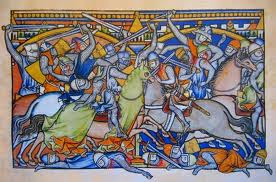
Image
  In 1229, the rapaciousness of the Emperor’s baillies provoked a response they apparently had not anticipated. In less than three months, they were facing not resistance or insurgency but a full-scale challenge to their authority in the shape of an invasion. Whereas, with their mercenaries, they had held a monopoly on force of arms up to this point, in early July 1229 they were confronted by an army led by two barons with hundreds of knights.   In the most comprehensive modern history of the Kingdom of Cyprus, Prof. Peter Edbury writes that “spurred on by the news of the sequestration of their fiefs and plight of their womenfolk,” [i] a force of men raised by the Lord of Beirut set sail from Acre and landed at the Templar fort of Gastria to the north of Famagusta. The size of that force is unrecorded, but it must have included several hundred knights. The Five Ballies Frederich II had left in control of Cyprus (See: The Emperor’s Men) controlled not only the feudal re...

The Emperor's Men: The Five Baillies of Cyprus

Image
Frederick II spent little more than a month on Cyprus, but his short stop triggered a chain of events that ended with the Holy Roman Emperor losing this rich and valuable kingdom forever. While this was the result of the Emperor's disastrous policies, he also showed poor judgement in his choice of deputies or “baillies, " who aggravated the situation and brought rebellion to a head. The fundamental mistake that Frederick II made with respect to Cyprus was his refusal to recognize it as an independent and unique kingdom, rather than simply “part of the Empire.” He took no account of the fact that it had its own history and laws, and conveniently overlooked the fact that his ancestors had had no role in the conquest or establishment of the kingdom. Instead, as David Abulafia points out, he “insisted that, as overlord of the king of Cyprus, he had full powers of intervention in the island’s affairs.” [i] Prof. Peter Edbury suggests that, based on his actions, Frederick’s princ...