Posts

Showing posts with the label Battle of Nicosia

Balian II: Son and Heir to Beirut

Image
  Balian, the Lord of Beirut’s eldest son and heir, was a close friend and “compeer” of Philip de Novare. He, therefore, figures comparatively prominently in Novare’s autobiographical account of the civil wars.  He was an ardent supporter of his father’s struggle for the Rule of Law in Outremer and took over as the leader of the baronial opposition to Hohenstaufen rule in the crusader states at his father’s death in 1236. Yet, based on Novare’s account (who knew both men well), he had a decidedly different temperament and personality from his father. I provide a biography in two parts.   Balian first enters the historical record on the (unnamed) day of his knighting. Interestingly, Novare notes that he and his younger brother Baldwin were knighted jointly, suggesting that either Balian’s knighting was delayed or his brother’s was moved forward — or both. The knighting of a lord’s eldest son was always celebrated more or less lavishly, and a lord was often allowed to le...
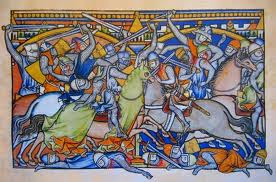
The Battle of Nicosia - July 14, 1229

Image
  In 1229, the rapaciousness of the Emperor’s baillies provoked a response they apparently had not anticipated. In less than three months, they were facing not resistance or insurgency but a full-scale challenge to their authority in the shape of an invasion. Whereas, with their mercenaries, they had held a monopoly on force of arms up to this point, in early July 1229 they were confronted by an army led by two barons with hundreds of knights.   In the most comprehensive modern history of the Kingdom of Cyprus, Prof. Peter Edbury writes that “spurred on by the news of the sequestration of their fiefs and plight of their womenfolk,” [i] a force of men raised by the Lord of Beirut set sail from Acre and landed at the Templar fort of Gastria to the north of Famagusta. The size of that force is unrecorded, but it must have included several hundred knights. The Five Ballies Frederich II had left in control of Cyprus (See: The Emperor’s Men) controlled not only the feudal re...